AR in the music industry

Project Description

This project explores how Augmented Reality (AR) can revolutionize virtual concerts, creating unique and immersive experiences for young adults aged 18-34. The goal is to use AR to redefine what a concert can be, blending the physical and digital worlds to make events more interactive, exciting, and accessible.

The idea is to design virtual concerts where fans can experience enhanced performances through AR visuals, interact with 3D effects, and connect with artists and other attendees in real-time. These concerts could be accessed from home or at AR-enabled venues, offering a completely new way to enjoy live music. By looking into existing platforms and understanding what music fans enjoy, this project will develop a prototype that shows how AR can transform virtual concerts. The focus is on creating innovative experiences that are fun, engaging, and push the boundaries of how people interact with music.
Identification Phase

In the identification phase, we explored how Extended Reality (XR) is transforming industries, particularly the music industry. Traditionally, music is experienced through streaming services or live concerts, but XR offers a new, more interactive way to engage. One exciting possibility is immersive concerts, where fans could attend live shows in virtual spaces or relive past performances. AR could even project concerts into living rooms as holograms. XR also enables interactive music experiences, like exploring VR worlds based on albums or stepping inside music videos.

For artists, XR offers virtual studios for collaboration and experimentation. While there are challenges, such as high costs and privacy concerns, XR could deepen connections between artists and fans, create new revenue streams, and make music more accessible globally. The potential for XR to transform music is clear.

Investigation Phase

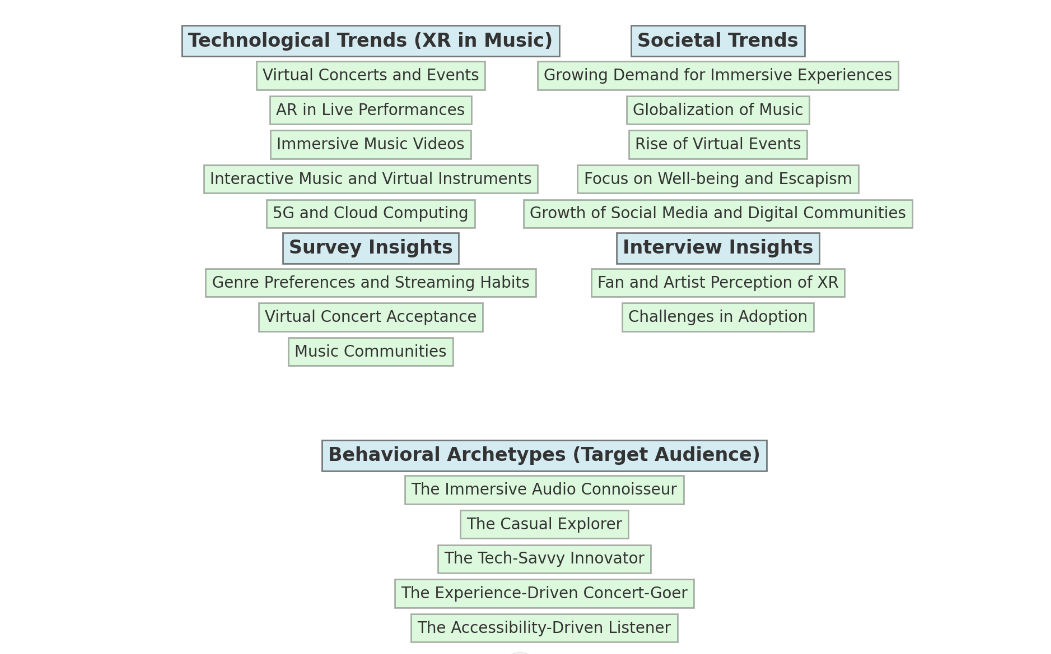
In the investigation phase, we explored societal and technological trends shaping XR in the music industry, focusing on its impact on music consumption among 18-34-year-olds. We found that virtual concerts, hosted on platforms like Fortnite and Roblox, are growing in popularity, with artists like Travis Scott and Ariana Grande reaching global audiences. AR is also enhancing live shows with holograms and interactive visuals, improving accessibility, especially for those with hearing impairments. XR is transforming music videos into interactive, 360-degree experiences, and advances in 5G and cloud computing are making these experiences more accessible on mobile devices.

Societal trends show increasing demand for personalized, immersive entertainment and virtual events. Fans are seeking deeper connections with music, and XR’s potential to foster social interactions through shared digital experiences is appealing to online communities. We conducted a Survey and several Interviews, revealing that while 66% of respondents are open to virtual concerts, 60% still value live events more. However, 93% agree virtual concerts improve accessibility. Insights from interviews with fans and an artist from Bulgaria highlighted the importance of cost-effectiveness and accessibility.

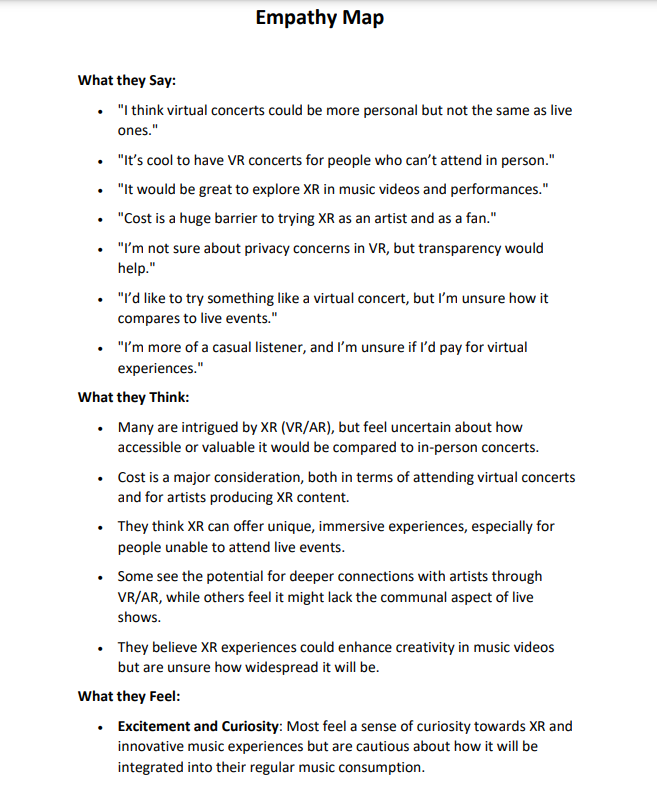
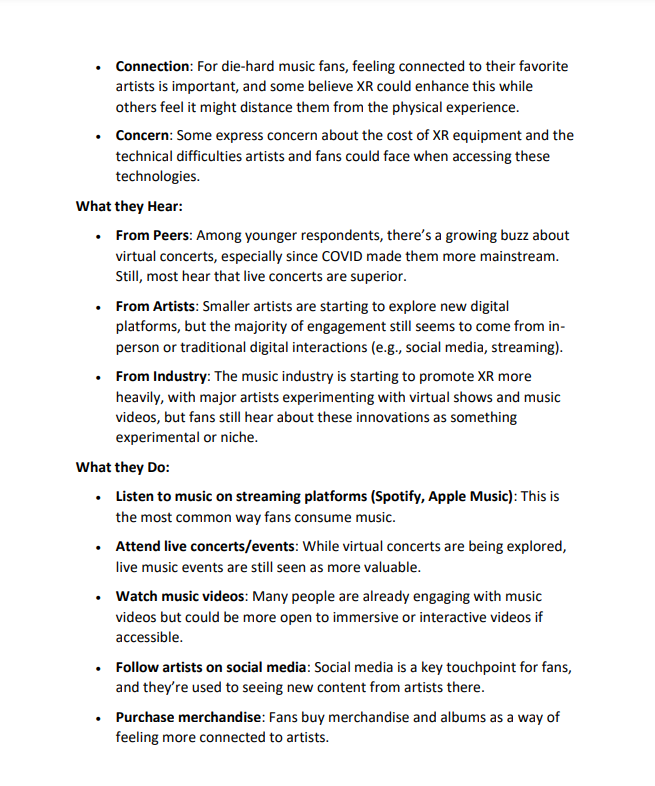
We created an Empathy Map to capture our audience’s motivations and preferences, emphasizing high-quality audio, social connection, and accessibility. Our research shows XR’s potential to create more inclusive, interactive, and accessible music experiences.

Ideation Phase

In the ideation phase, we brainstormed a range of ideas for virtual concerts and immersive worlds, narrowing them down to three key concepts: Virtual Concerts in Immersive Worlds, AR Music Videos, and AR Concert Enhancements. To organize and prioritize these ideas, we used an affinity diagram (first picture on the right), grouping similar concepts and identifying patterns to help us select the best options.

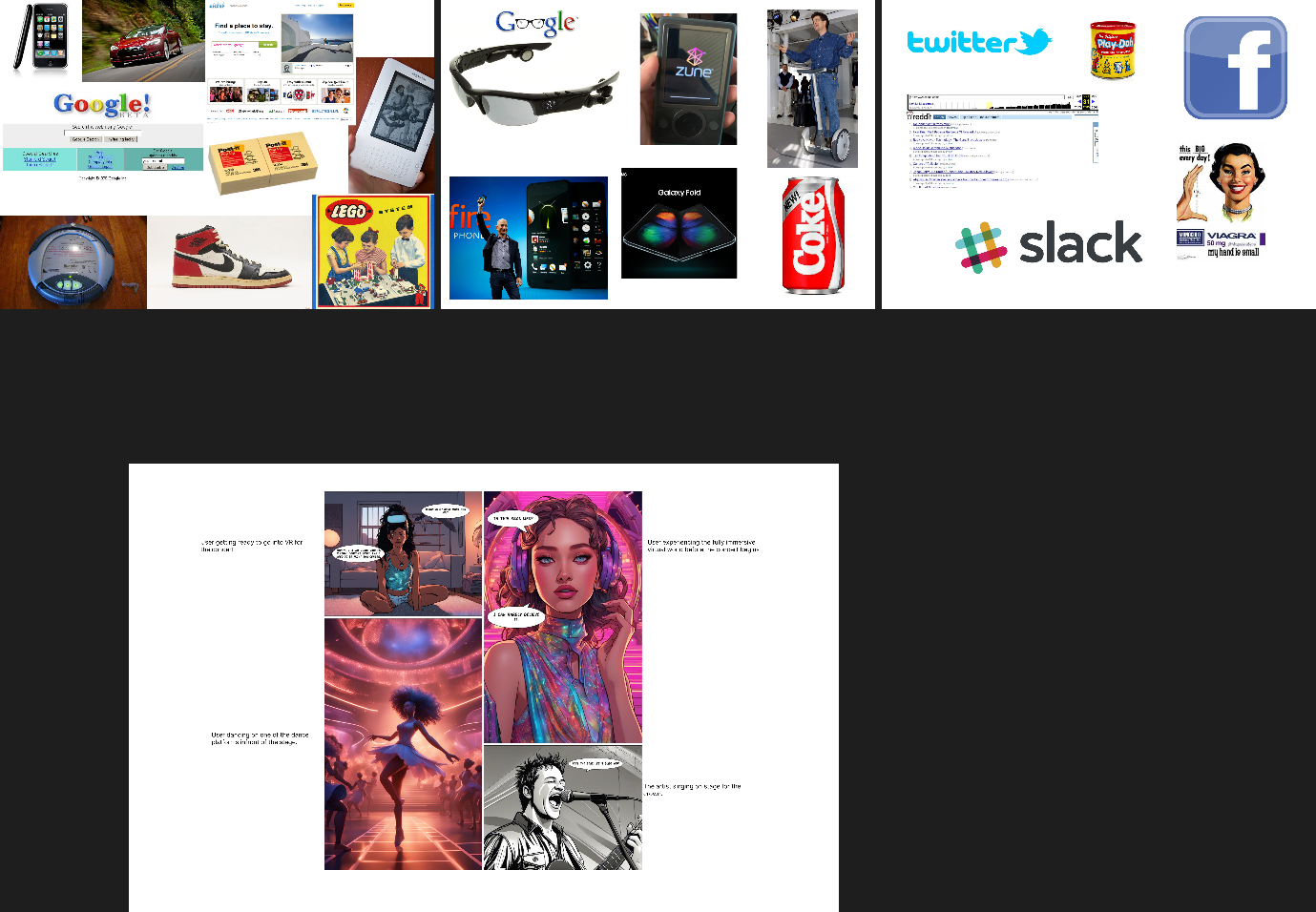
We outlined 10 goals for virtual concerts, focusing on scalability, interactive environments, realistic avatar customization, and social features to ensure an innovative and engaging experience. As part of the Substantiation process, we researched existing virtual concerts, like those in Fortnite and Coachella, to validate our ideas and provide direction. We presented our concepts through a concept board (second picture on the right), visualizing the concert experience, interactive features, and immersive worlds, which represents our vision for the project.

Impact Assessment Phase

Reflecting on the intended, unintended, and undesired Impacts, I realize that categorizing products is challenging. For example, while the iPhone revolutionized communication, it also brought issues like addiction, distraction, and burnout, which were unintended consequences of its success. Similarly, its role in reshaping our lives through constant connectivity has had unexpected effects.

Products like Google Glass show that failure doesn’t end innovation. Though it didn’t succeed, it influenced wearable tech like smartwatches and AR glasses. Spotify’s shift to streaming disrupted the music industry by changing revenue models and making music more disposable. This insight helps me understand how XR concerts could create new revenue streams while challenging traditional concert formats.

We created moodboards (picture below) to visualize the impacts of each product, guiding us in shaping the virtual concert project and considering both positive and negative effects. In conclusion, assessing a product’s impact requires considering unintended consequences, helping us design XR concerts with better outcomes.

Implementation Phase

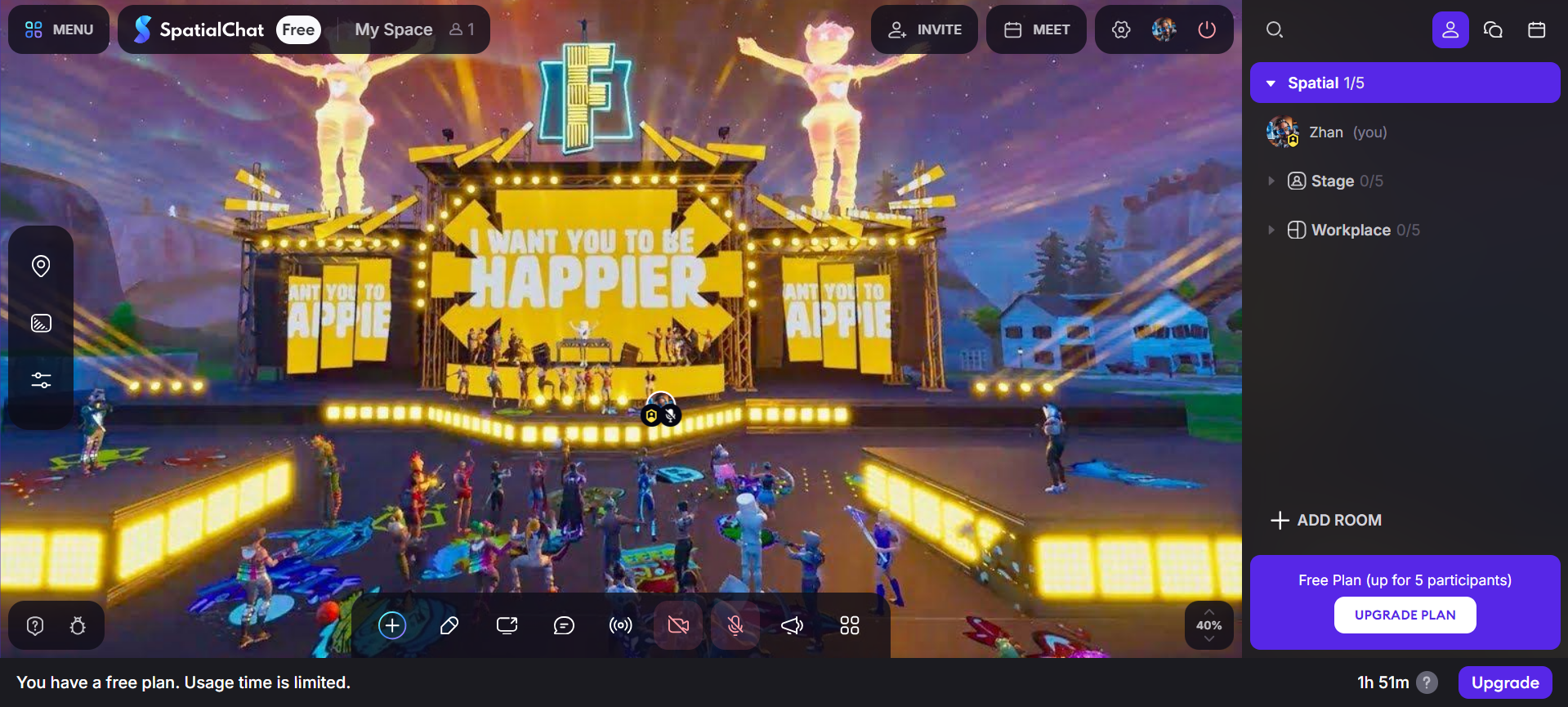
During our two-week exploration of virtual concert concepts, we aimed to test key ideas about virtual presence and spatial audio through two parallel prototypes. The goal was to gather user feedback on immersion and engagement, test different virtual concert approaches, and evaluate spatial audio implementations. The first prototype used Fortnite's Festival stage map to explore virtual concert spaces, focusing on user movement and social interaction. After familiarizing ourselves with the map, we conducted 2-3 test sessions with small groups, observing interactions and gathering feedback.

For documentation, we used Fortnite accounts, recording software, and Discord for communication. This allowed us to assess how users navigated and interacted during the virtual concert. The second prototype used Spatial Chat to simulate concert acoustics and directional sound. We tested audio setups over 2-3 sessions, gathering feedback on how well the spatial audio mimicked a live concert experience. Participants had headphones and stable internet connections for consistent testing.

As we continue exploring virtual concerts, it's essential to consider both the potential Positive Impacts and Possible Dystopian outcomes. On the positive side, virtual concerts offer immersive, accessible experiences that break geographical barriers, allowing deeper connections between artists and fans. They also provide new revenue streams and eco-friendly alternatives to traditional concerts.

However, there are risks, such as social isolation, privacy concerns, and inequality due to the digital divide. These challenges must be managed to ensure virtual concerts have a positive impact while avoiding negative societal effects.

Project Reflection

Throughout this project, we explored how virtual concerts could transform the music industry by creating immersive experiences with XR technologies to enhance fan engagement. After brainstorming, we used an affinity diagram to narrow down the top three concepts. We then crafted a concept board to visualize the future of virtual concerts. We developed two prototypes: one in Fortnite's Festival stage and another using Spatial Chat for concert acoustics. User feedback was positive, with excitement about virtual concerts but concerns about technical issues and accessibility. The integration of spatial audio was well-received, though connectivity and device compatibility posed challenges.

Reflecting on products like Spotify and Google Glass helped us assess both positive and negative impacts of emerging technologies. While virtual concerts offer new engagement opportunities, potential drawbacks include digital exclusion and privacy concerns. In summary, this project provided valuable insights into the potential and limitations of virtual concerts. While the technology holds promise, ensuring accessibility, inclusivity, and technical reliability will be crucial for success.